Ribe cage
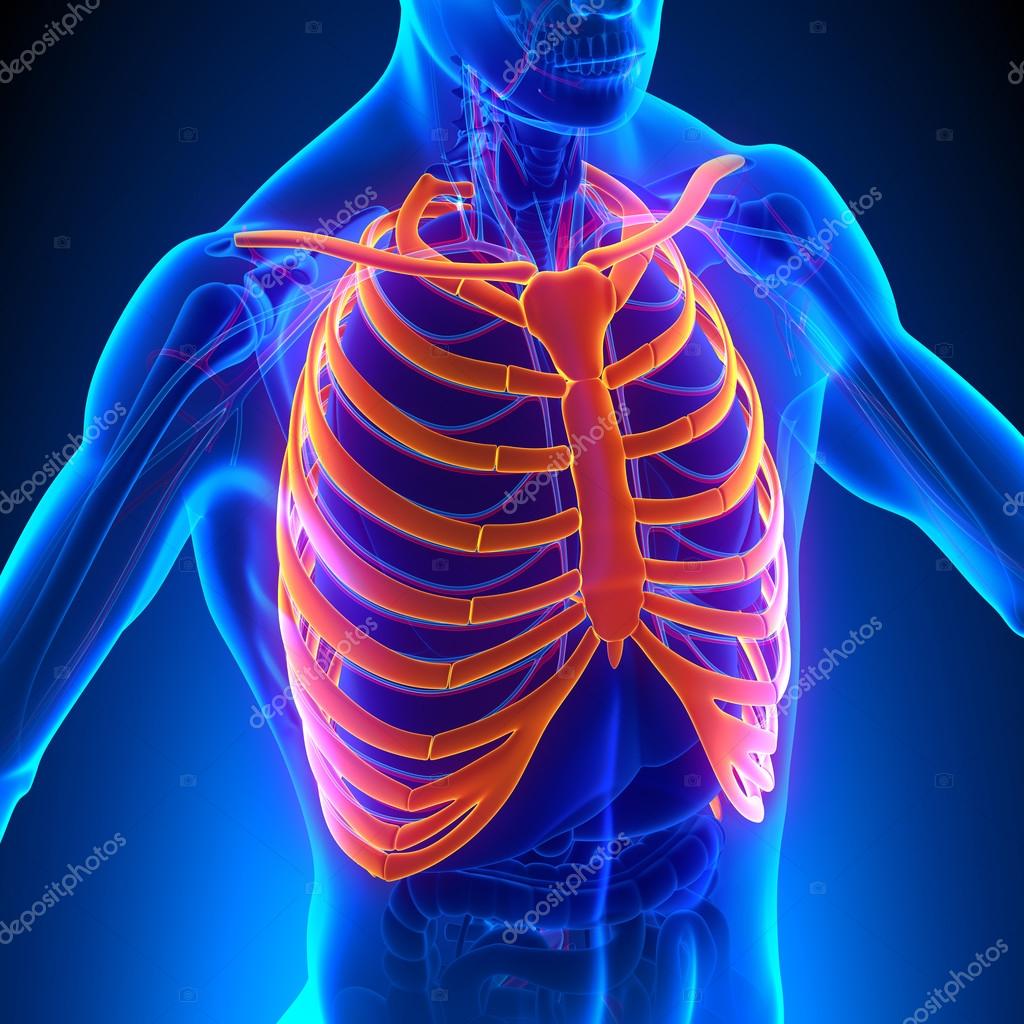
The term “rib cage” refers to the bony structure that surrounds and protects the thoracic cavity in vertebrates, including humans. It consists of twelve pairs of ribs that are attached to the spine at the back and curve around to the front, joining the sternum (breastbone) in the middle. The rib cage provides support and protection for vital organs such as the heart, lungs, and major blood vessels.
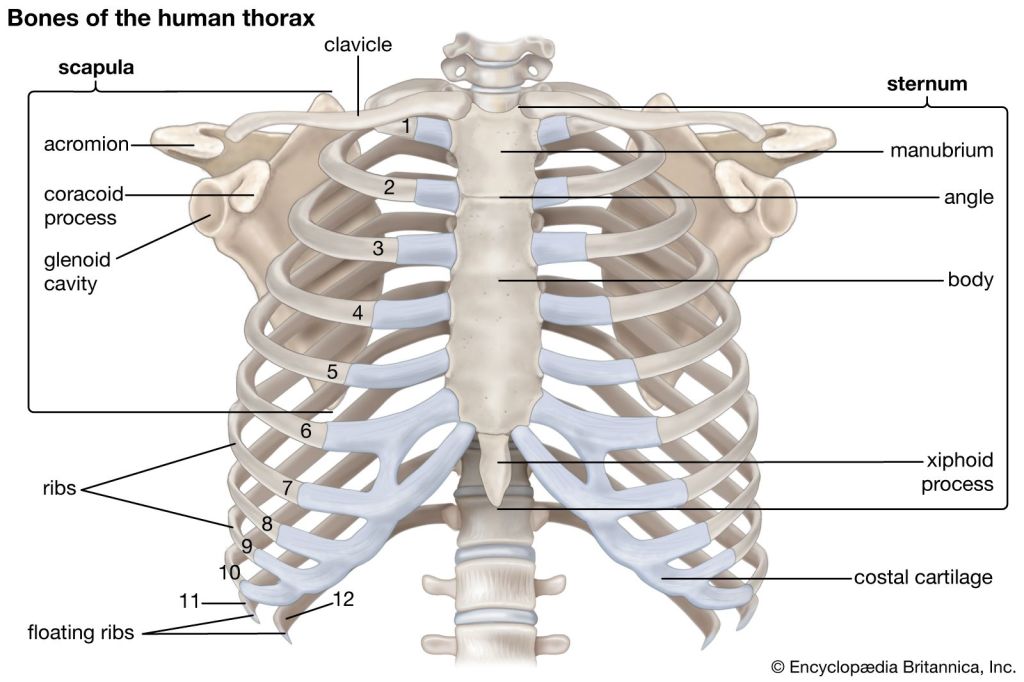
The ribs themselves are flat and curved bones that are connected to the spine by joints called costovertebral joints. The first seven pairs of ribs are known as true ribs because they directly attach to the sternum via costal cartilage. The next three pairs are called false ribs because their cartilage connects them to the seventh rib, rather than directly to the sternum. The last two pairs are called floating ribs because they do not connect to the sternum at all.
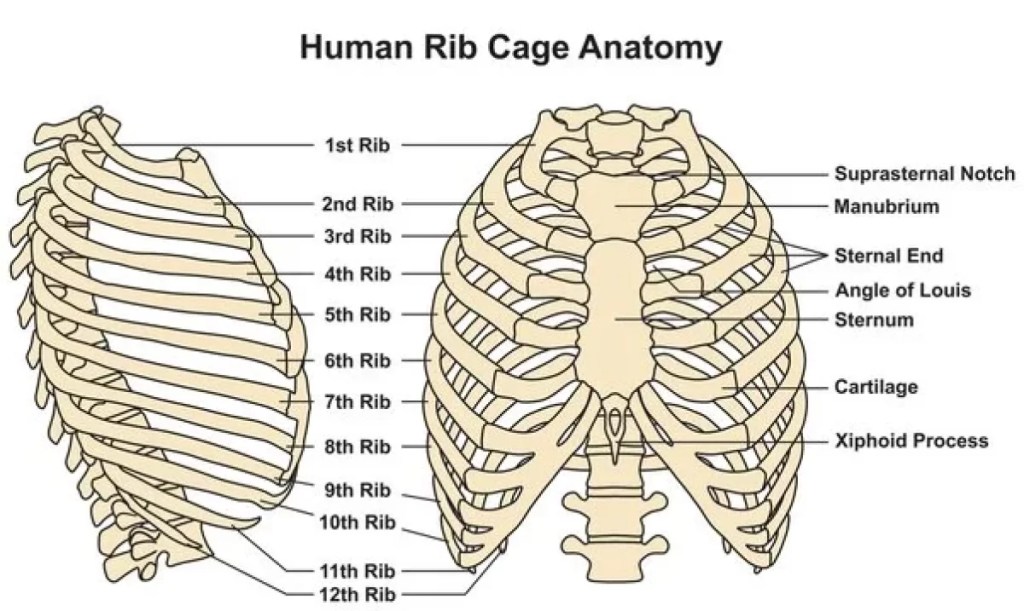
The rib cage is essential for protecting the organs within the thoracic cavity from external impact, providing structural support for the upper body, and assisting in the process of breathing. The expansion and contraction of the rib cage during breathing allow the lungs to inflate and deflate, facilitating the exchange of oxygen and carbon dioxide.
 science