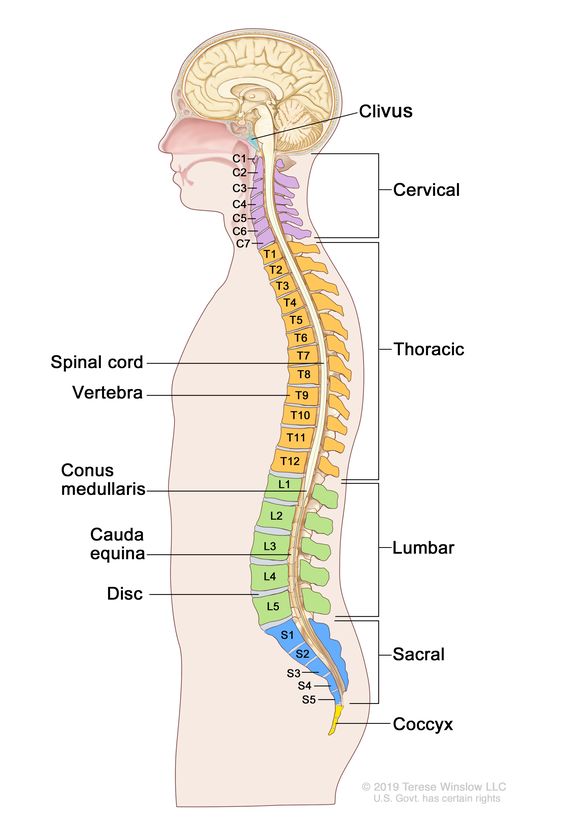
The spinal cord is a long, cylindrical bundle of nerve tissue that extends from the base of the brain down the vertebral column. It is a crucial part of the central nervous system (CNS), along with the brain. The spinal cord is responsible for transmitting sensory information from the body to the brain and conveying motor signals from the brain to the body.
Anatomy of the Spinal Cord:
The spinal cord is approximately 45 cm (18 inches) long and about as thick as a human finger. It is protected by the vertebrae, which form the spinal column or backbone. The spinal cord consists of gray matter and white matter.
Structure:
The spinal cord is composed of nerve fibers, which are long, thread-like structures that transmit electrical signals, and surrounding support cells called glial cells. It is divided into different regions or segments, each corresponding to a specific area of the body.
The spinal cord is organized into four main regions:
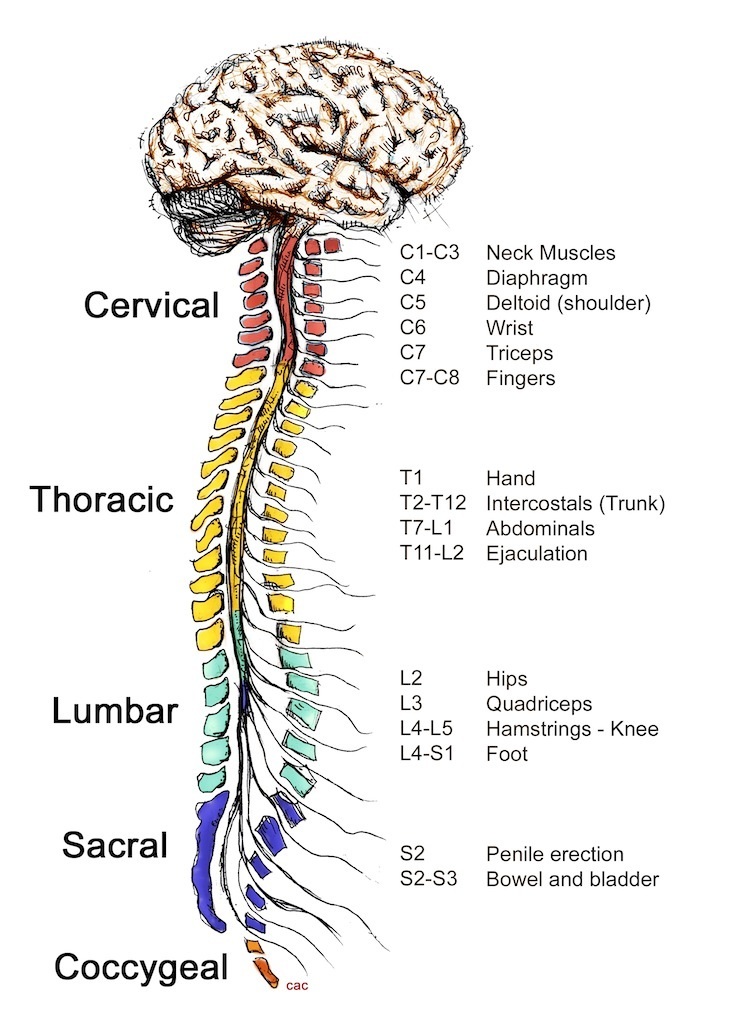
Spinal Cord Overview
The spinal cord is a long, thin, tubular bundle of nervous tissue that extends from the base of the brain down the vertebral column, which is made up of individual bones called vertebrae. It is a vital part of the central nervous system (CNS) and plays a crucial role in transmitting signals between the brain and the rest of the body.
Structure of the Spinal Cord:
The spinal cord is composed of millions of nerve fibers that are grouped into tracts. These tracts carry sensory information from the body to the brain (ascending tracts) and transmit motor signals from the brain to the muscles and organs (descending tracts).
The spinal cord is protected by the spinal
Function of the Spinal Cord:
The spinal cord serves as a pathway for nerve impulses to travel between the brain and the rest of the body. It is responsible for relaying sensory information, such as touch, pain, temperature, and proprioception (awareness of body position), from various parts of the body to the brain. Motor commands from the brain are also transmitted through the spinal cord to control muscle movement and organ function.
Additionally, the spinal cord is capable of coordinating certain reflex actions independently of the brain. Reflexes are automatic, involuntary responses to stimuli that help protect the body and enable quick reactions without conscious thought. Examples of spinal reflexes include the knee-jerk reflex and withdrawal reflex.
Injury to the Spinal Cord:
Spinal cord injuries can have significant and often permanent effects on a person’s motor and sensory functions. Damage to the spinal cord can result in loss of sensation, muscle weakness or paralysis, and impairment of bodily functions below the level of injury. The severity and extent of these effects depend on the location and severity of the injury.
Treatment and Rehabilitation:
Treatment for spinal cord injuries often involves immediate medical intervention to stabilize the spine and prevent further damage. Rehabilitation programs are then typically initiated to help individuals regain as much function as possible and adapt to their new circumstances. Rehabilitation may involve physical therapy, occupational therapy, assistive devices, and other supportive measures.
Research and advancements in medical science continue to explore potential treatments and therapies for spinal cord injuries, including nerve regeneration techniques, neural interfaces, and other innovative approaches. While complete functional recovery from spinal cord injuries is currently limited, ongoing efforts aim to improve outcomes and quality of life for individuals with these injuries.
 science