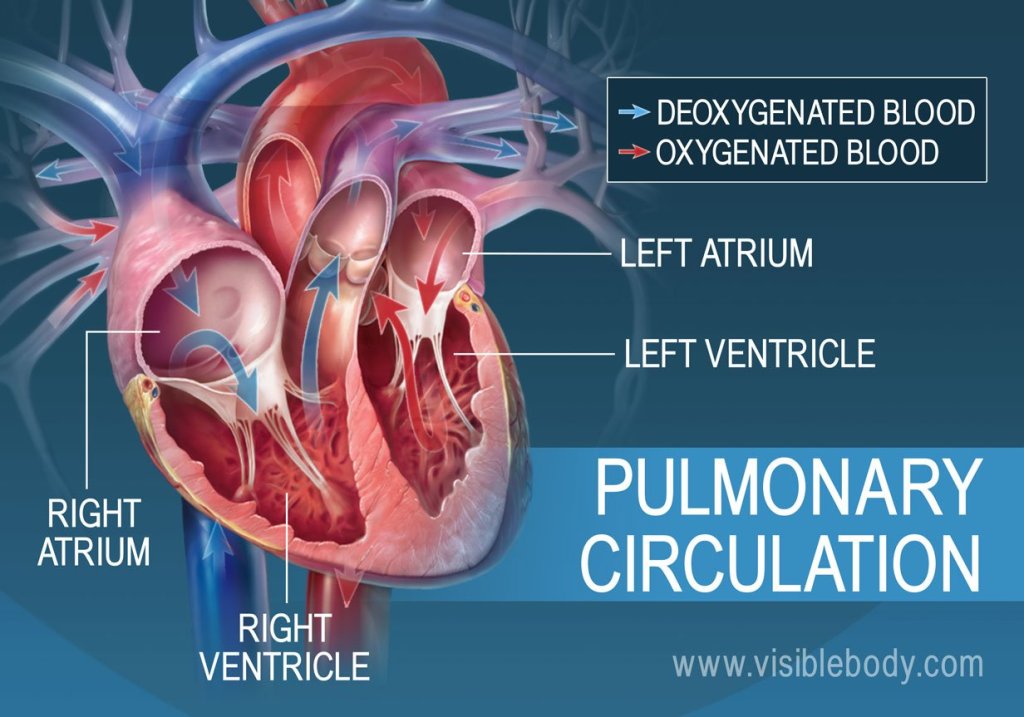
Blood circulation, also known as the cardiovascular system or the circulatory system, is a vital process that transports oxygen, nutrients, hormones, and other essential substances throughout the body. It plays a crucial role in maintaining homeostasis, delivering oxygen to tissues, removing waste products, and supporting overall bodily functions.
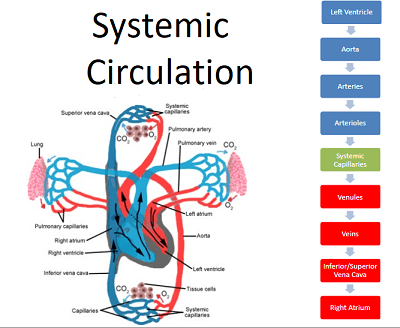
Circulation Summary
Systemic circulation refers to the part of the circulatory system that carries oxygenated blood from the heart to the various tissues and organs of the body and returns deoxygenated blood back to the heart. It is responsible for delivering oxygen, nutrients, hormones, and other vital substances to the cells and removing waste products and carbon dioxide.
The systemic circulation begins when oxygenated blood leaves the left ventricle of the heart through the largest artery in the body, called the aorta. The aorta branches into smaller arteries, which further divide into arterioles and eventually into tiny capillaries. Capillaries are the site of exchange between the blood and the surrounding tissues. Oxygen and nutrients diffuse out of the capillaries into the cells, while waste products and carbon dioxide move from the cells into the capillaries.
From the capillaries, the blood collects into venules, which merge to form larger veins. Veins progressively merge and increase in size, eventually forming the superior and inferior vena cava, which return deoxygenated blood back to the right atrium of the heart. The blood is then pumped to the lungs through the pulmonary circulation to pick up oxygen and remove carbon dioxide, starting the cycle again.
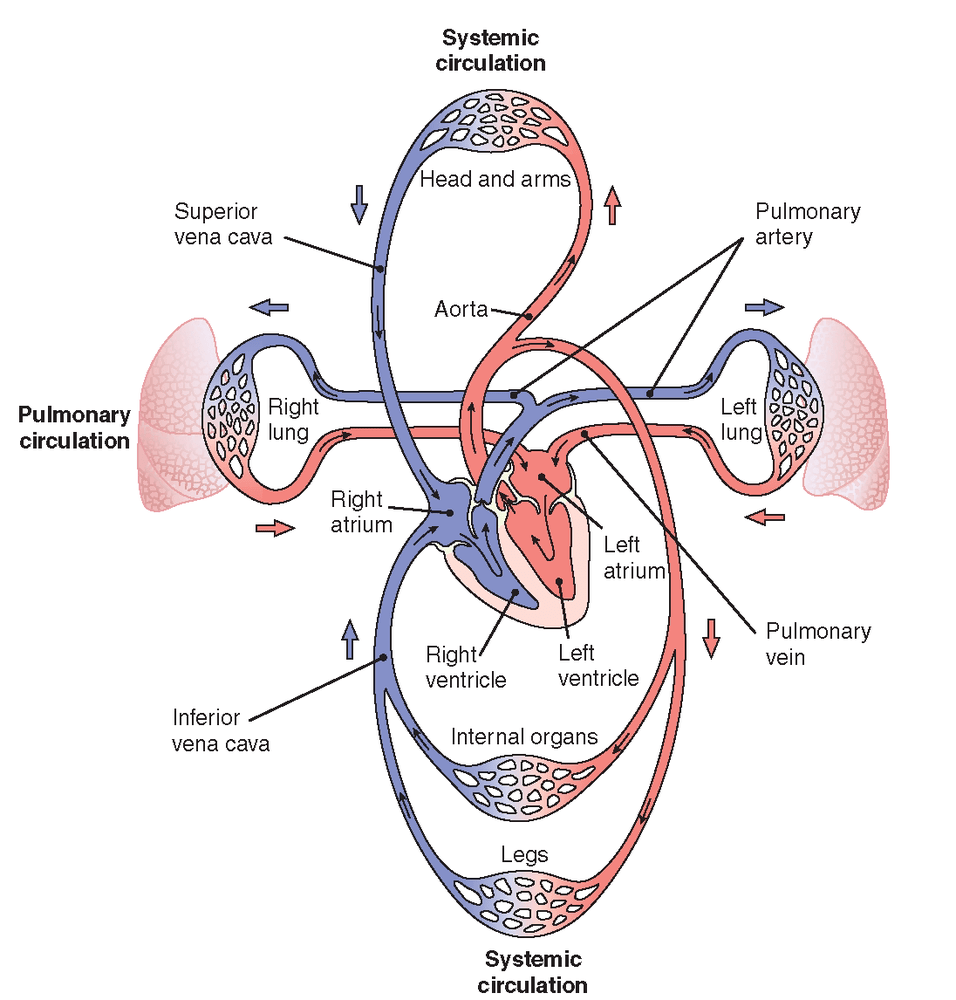
The circulatory system consists of the heart, blood vessels (arteries, veins, and capillaries), and blood. It is divided into two major components: the systemic circulation and the pulmonary circulation.
Systemic Circulation: As mentioned earlier, systemic circulation involves the flow of oxygenated blood from the heart to the body tissues and the return of deoxygenated blood back to the heart. The process can be summarized as follows:
Oxygenated blood is pumped out of the left ventricle of the heart into the aorta, the largest artery in the body.
The aorta branches into smaller arteries, which further divide into arterioles and capillaries. The capillaries are where oxygen and nutrients are exchanged with the surrounding tissues.
Deoxygenated blood, now carrying waste products and carbon dioxide, is collected by venules, which merge to form veins.
Veins gradually merge and increase in size, forming the superior and inferior vena cava, which return deoxygenated blood to the right atrium of the heart.
The deoxygenated blood then enters the right ventricle and is pumped to the lungs via the pulmonary circulation to pick up oxygen and release carbon dioxide.
Pulmonary Circulation: Pulmonary circulation refers to the circulation of blood between the heart and the lungs. It is responsible for oxygenating the blood and removing carbon dioxide. The process can be summarized as follows:
Deoxygenated blood from the right atrium is pumped into the right ventricle.
The right ventricle contracts, and the blood is pushed into the pulmonary artery.
The pulmonary artery divides into smaller arteries, which further divide into capillaries in the lungs.
In the lung capillaries, carbon dioxide is released from the blood, and oxygen from inhaled air diffuses into the blood.
Oxygenated blood is then collected by venules, which merge to form veins, and ultimately into the pulmonary veins.
The pulmonary veins carry the oxygenated blood back to the left atrium of the heart, completing the pulmonary circulation.
This continuous circulation of blood ensures the transport of vital substances and the maintenance of overall body function. The heart’s pumping action creates pressure, and the blood vessels distribute and regulate the flow to meet the specific needs of different tissues and organs
 science